How to Draw Crocodile Easy for Kids 🐊 | Step-by-Step Guide 2025
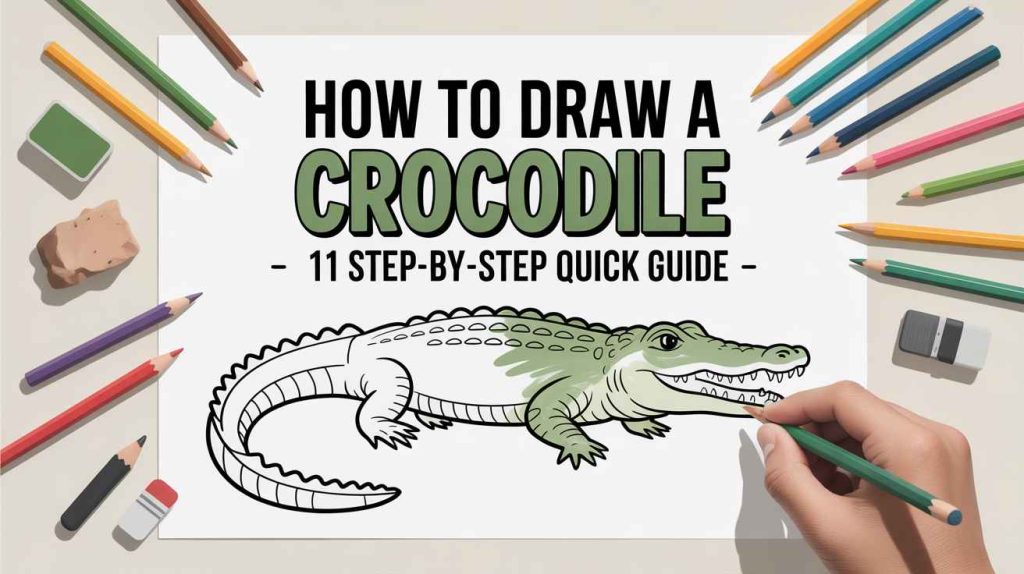
Hey there! So, you’ve landed here because you want to know how to draw crocodile, right? Maybe you’re a budding artist, a parent looking for a fun activity with your kids, or just someone who loves these fascinating reptiles and wants to bring them to life on paper. Well, you’re in the perfect spot!
I’ve spent a fair amount of time sketching animals—from cute puppies to fierce tigers—and crocodiles are seriously fun to draw. They’re not just those scary creatures lurking in rivers but amazing subjects with cool textures and shapes. Plus, learning how to draw crocodile easy for kids or adults alike is totally doable when you break it down.
Ready to get your pencils out? Let’s dive in! 😄
Key Takeaways Before We Start
- Drawing a crocodile can be simple or detailed, depending on your style and goal.
- Whether you want a realistic crocodile or a cute cartoon version, step-by-step guidance helps.
- Focusing on the crocodile head or skin texture adds personality to your drawing.
- We’ll cover both easy crocodile drawings for kids and more advanced tips for adults.
- You’ll get a handy 11-step guide to draw a crocodile from start to finish.
Why Learn How to Draw Crocodile?
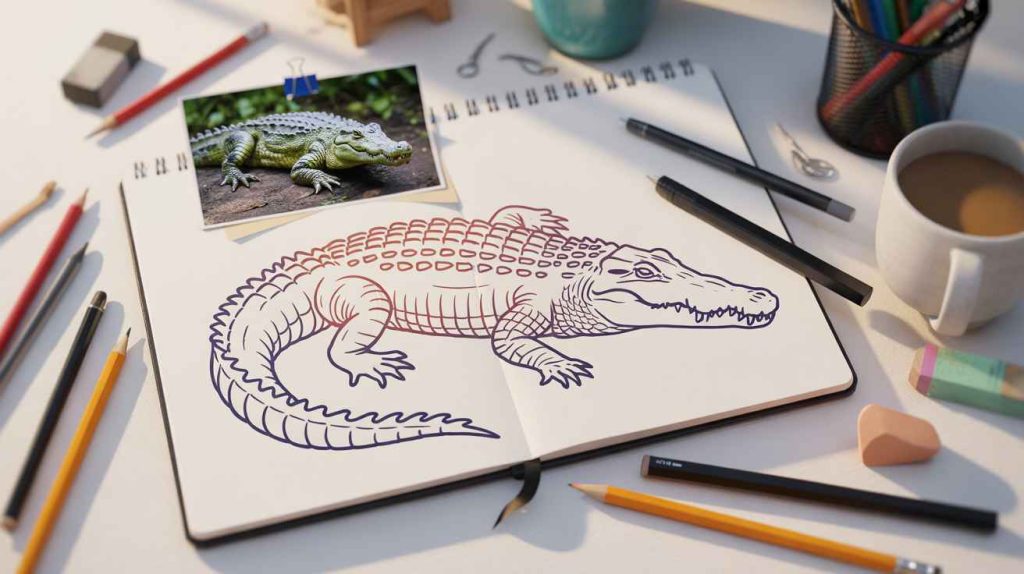
Before we jump in, let me share why I think crocodile drawings are super rewarding. Have you ever noticed how their scaly skin looks like nature’s own armor? And those powerful jaws? Drawing these features can improve your observation skills and challenge your artistic creativity.
Also, how to draw crocodile one piece means capturing the whole form in a smooth flow—which is great practice for mastering proportions and flow in animal art. Plus, it’s a great excuse to nerd out on nature and art simultaneously!
If you’re interested in more animal-themed projects, don’t forget to check out our animal coloring pages — it’s a treasure trove of inspiration!
Required Items for Drawing a Crocodile
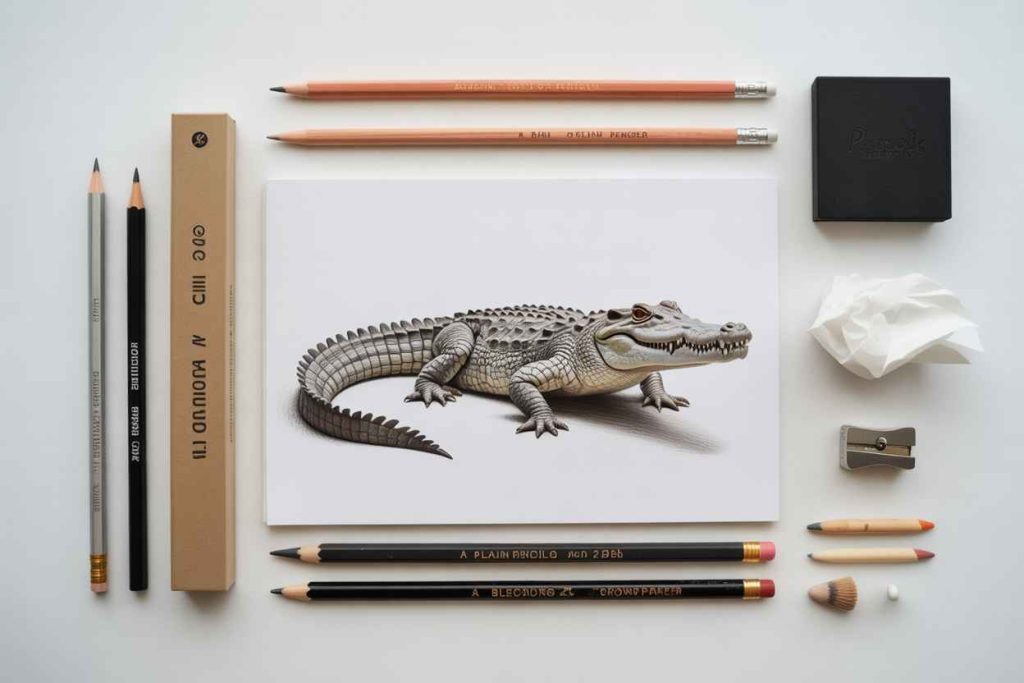
Before you jump in, make sure you have these basics ready to go. Having the right tools can make the process smoother and more enjoyable:
- Pencils:
- A hard pencil (H or 2H) for light sketching
- A soft pencil (B or 2B) for shading and details
- Eraser:
- A good quality eraser to clean up your sketch lines
- Paper:
- Plain drawing paper or sketchbook
- Sharpener:
- To keep your pencil tips fine for details
- Optional:
- Blending stump or tissue for smooth shading
- Colored pencils or markers if you want to add color
Having these on hand will set you up perfectly for learning how to draw crocodile with pencil like a pro!
How to Draw Crocodile Step by Step
Let’s get into the fun part. I’m going to give you a clear, easy-to-follow 11-step guide that works whether you’re drawing with a pencil, pen, or tablet. And FYI, this works great as how to draw crocodile easy or a bit more detailed if you like.
Step 1: Draw the Eyes

Start by sketching two circles to form the crocodile’s eyes. The first circle should be small, and the second circle should be slightly larger than the first one. Place them a short distance apart, keeping in mind the crocodile’s head shape. Inside each circle, draw a smaller filled-in circle (the pupil) to create the eyeball. Make sure the pupils are positioned to give the crocodile a realistic, focused gaze.
Step 2: Sketch the upper side of Head Outline

Next, add two simple lines to outline the head shape: on the left side, draw a longer, downward-slanting line, and on the right side, draw a slightly shorter, downward-slanting line. These lines will help define the crocodile’s head and snout.
Step 3: Draw the Eyes and Nostrils

At the bottom point where the two head lines meet, sketch a rounded, slightly triangular nose shape. Make sure it’s centered between the eyes, with the tip pointing forward.
From the nose, extend a gentle curved line backward on each side to form the upper part of the crocodile’s mouth. This curve should be smooth and slightly downward, giving the saltwater crocodile its signature jawline.
Step 4: Draw the Complete Mouth and Lips

From the end of the upper mouth curve, extend a long sweeping line downward and then forward to form the lower jaw.
Make sure the lower jaw line is slightly thinner than the upper to give a natural look.
Add a subtle inner curve just inside both the upper and lower jaws to represent the crocodile’s lips. Keep them smooth, as saltwater crocodiles have wide, powerful mouths.
Step 5: Draw the Front Leg (Without the Paw)

From just below the crocodile’s lower jaw, sketch a curved line sloping downward to indicate the upper part of the front leg.
Add a second parallel line next to it for thickness, keeping the lines slightly tapered toward the end.
Stop before drawing the paw — this step only shapes the upper leg section so it connects naturally to the body.
Step 6: Draw the Upper Leg Paw

At the end of the front leg you sketched earlier, draw the paw by adding four slightly curved toes with small, pointed claws.
Make sure the paw is angled slightly outward, matching the natural stance of a crocodile.
Now the head and front upper leg of your crocodile are fully complete.
Step 7: Sketch the Upper Zig-Zag Body
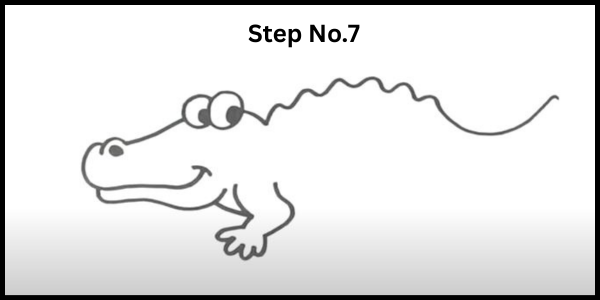
From the back of the crocodile’s head, draw a long, wavy zig-zag line all the way toward where the tail will be.
This zig-zag should represent the crocodile’s bumpy back scales, so make each bump slightly uneven for a natural look.
Keep the line gently curving as it moves back to give the body a realistic flow from head to tail.
Step 8: Draw the Tail Curve
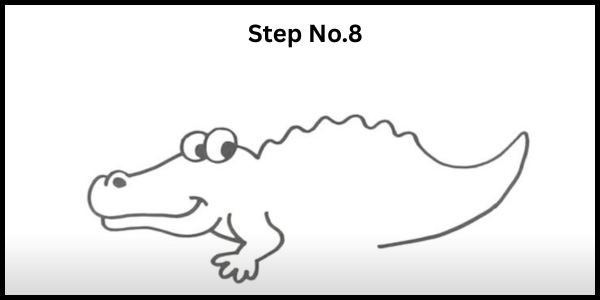
From the end of the zig-zag back, draw a smooth, curved line going downward to form the outer edge of the crocodile’s tail.
Continue curving this line forward until it reaches the area where the second back leg will be placed.
Make sure the tail tapers gradually so it’s thicker near the body and thinner at the tip for a natural crocodile shape.
Step 9: Draw the Second Back Leg and Paw
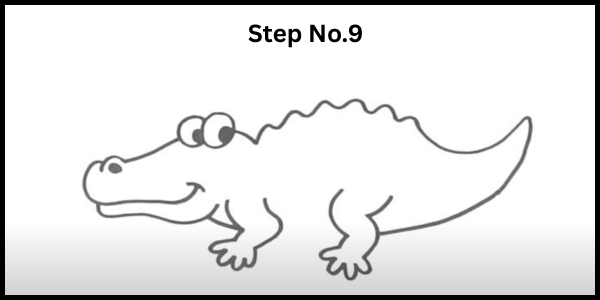
From the point where the tail curve meets the body, sketch a thick, strong hind leg bending slightly outward.
At the bottom of this leg, draw the paw with four visible toes, each ending in a sharp claw.
Keep the paw slightly wider than the leg for a realistic crocodile stance, showing its strength and balance.
Step 10: Draw the Lower Body Line to Complete the Crocodile Shape
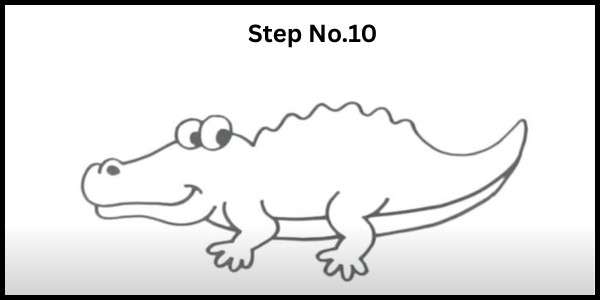
Starting just under the tip of the tail, draw a smooth, slightly curved line running under the body toward the front.
Continue the line until it reaches just below the head, connecting with the lower jaw area.
This line forms the crocodile’s belly and underside, completing the full outline of its body.
Step 11: Add the Lower Zigzag and Final Details
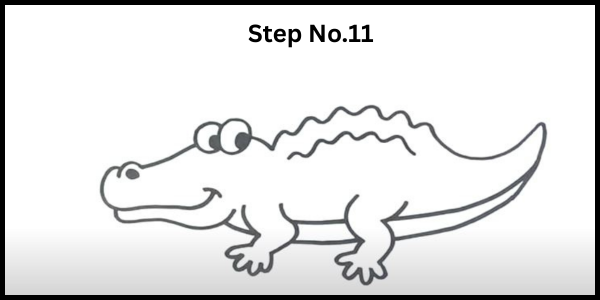
Draw a smaller zigzag line just below the main zigzag on the crocodile’s back — this adds extra texture and gives the look of rough, scaly skin.
Go over the whole outline, smoothing or sharpening any areas as needed, and make sure the head, legs, tail, and scales all look balanced.
Your saltwater crocodile drawing is now complete! 🐊 You have learnt how to draw crocodile in a simple way.
🎨 Colors & Details for Your Saltwater Crocodile
Once your crocodile drawing is complete, it’s time to bring it to life with colors! Saltwater crocodiles have earthy, muted tones that help them blend into their surroundings. Use the following color palette to make your illustration look realistic:
| Body Part | Color | Hex Code | Color Preview |
|---|---|---|---|
| Body | Dark Green | #006400 | |
| Underbelly | Light Yellow-Green | #ADFF2F | |
| Mouth Interior | Light Pink | #FFB6C1 | |
| Teeth | White | #FFFFFF | |
| Eye | Yellow | #FFFF00 | |
| Pupils | Black | #000000 |
🖌 Tips for Coloring:
- Use shading with a slightly darker olive (
#4B5320) on the shadowed side of the body to add depth. - Blend beige into olive green around the underbelly to create a smooth, natural transition.
- Add tiny black dots (
#000000) along the back and tail to mimic crocodile skin texture. - Highlight the scales with lighter green (
#6B8E23) to make the zig-zag ridges stand out.
Tips for Drawing Crocodile Easy for Kids
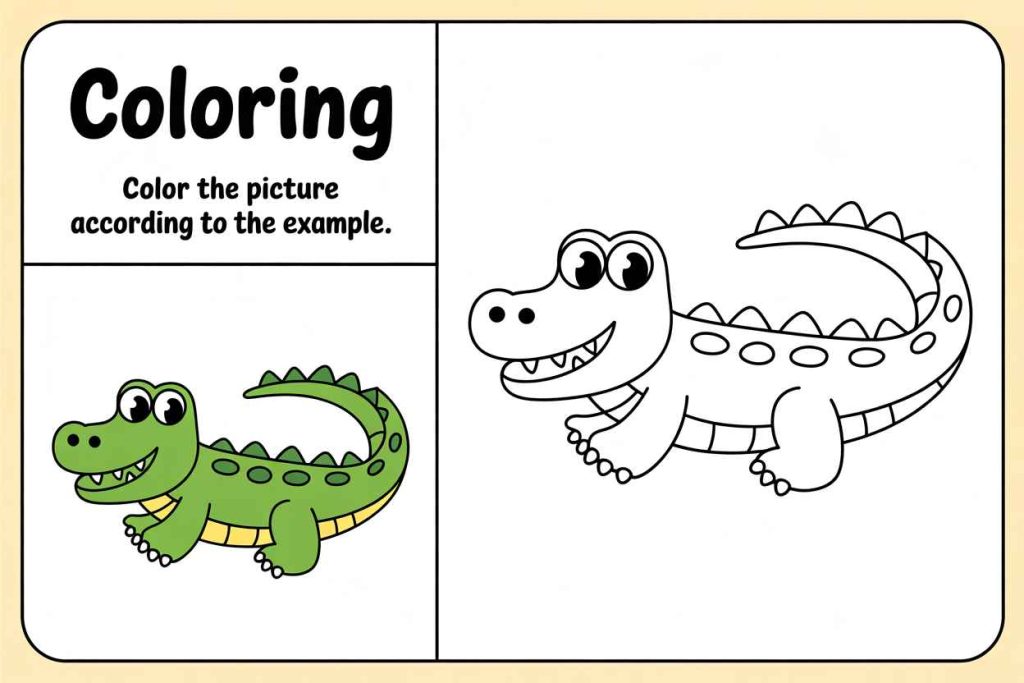
If you’re teaching kids or want a super simple style, here’s what works:
- Use big shapes and keep details minimal.
- Emphasize the smile and eyes to make it friendly.
- Skip complex scale patterns; just use dotted lines or simple shapes.
- Encourage coloring fun after sketching!
If you want more fun, easy projects to try with your little ones, our easy coloring pages for kids section is packed with perfect designs for beginners. Also, check out coloring pages for kids for a wide variety of simple, enjoyable coloring activities.
Easy Crocodile Drawings for Kids vs Crocodile Drawings for Adults
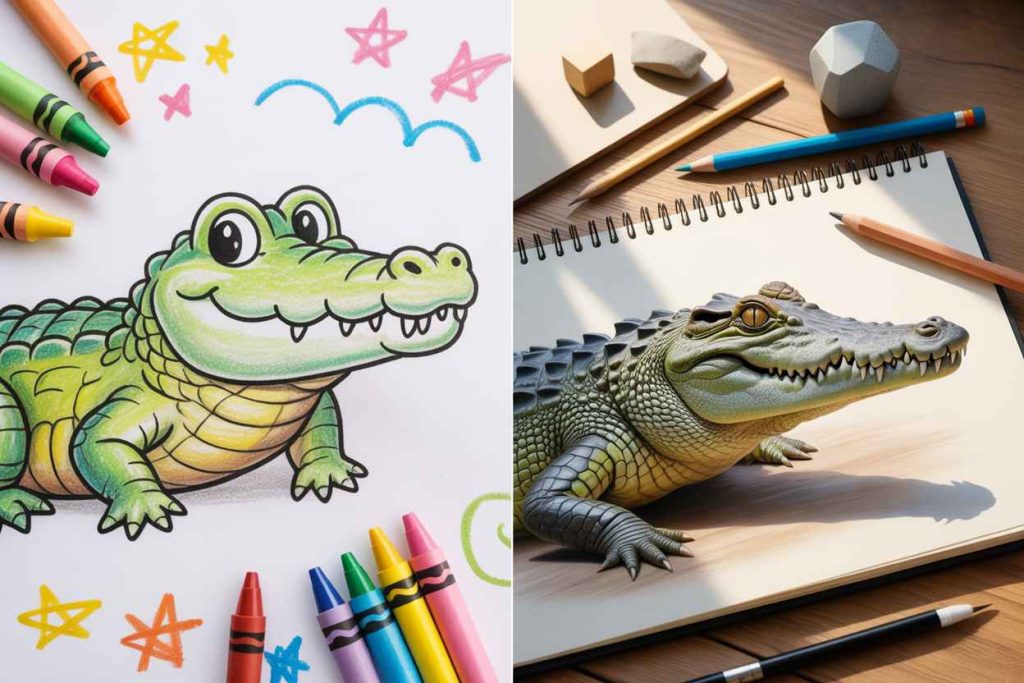
| Feature | Easy Crocodile Drawings for Kids | Crocodile Drawings for Adults |
|---|---|---|
| Complexity | Simple shapes, minimal details | Detailed anatomy and textures |
| Scale Texture | Basic dots or no scales | Realistic skin scales and bumps |
| Proportions | Slightly exaggerated | Accurate proportions |
| Shading | Little to none | Detailed shading and highlights |
| Time Required | 10-20 minutes | 1+ hour |
For those who love intricate art, our coloring pages for adults collection offers amazing challenges that will sharpen your skills.
Bonus: How to Draw a Saltwater Crocodile
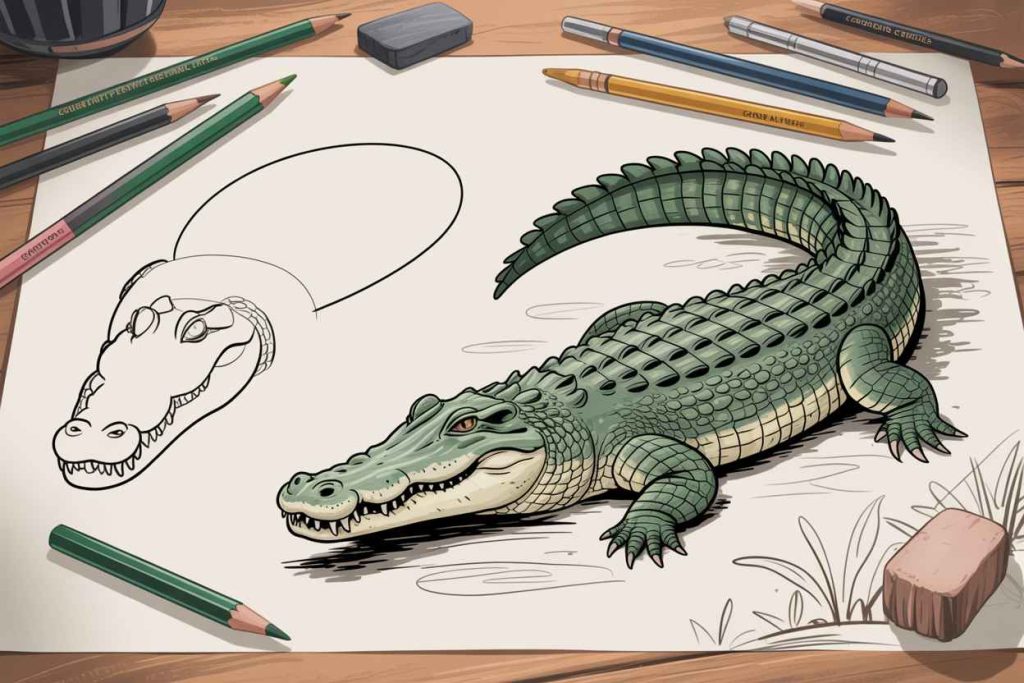
If you want to step up your game and draw the king of crocodiles — the saltwater crocodile — here’s a quick tip:
- Focus on a broader snout.
- More prominent ridges above the eyes.
- Add rougher, thicker skin texture.
- Bigger teeth and a more robust tail.
Want More Creative Fun?
If you enjoy learning how to draw crocodile easy, you might also want to try other fun and simple projects like our easy frog painting — a perfect next step to keep your creativity hopping! 🐸
FAQs About Drawing Crocodiles
Q1: What’s the easiest way to draw a crocodile for kids?
A: Keep it simple! Use big shapes like ovals and triangles, add a friendly smile, and skip detailed scales.
Q2: How can I make my crocodile drawing look realistic?
A: Focus on crocodile skin texture, accurate body proportions, and shading for depth. Reference photos help a lot.
Q3: Can I draw a crocodile in one piece without separate sketches?
A: Yes! Try to draw the whole outline fluidly, starting from the head and moving along the body and tail.
Q4: How do I draw the crocodile head?
A: Start with the shape of the snout, add eyes and nostrils, then sketch teeth and skin details.
Q5: What tools do I need to draw crocodiles?
A: A pencil, eraser, sharpener, and optionally colored pencils or markers for finishing touches.
Wrapping It Up: How to Draw Crocodile
So, there you have it—your very own friendly guide on how to draw crocodile step by step. Whether you’re aiming for easy crocodile drawings for kids or a more realistic crocodile, the key is breaking it down into manageable steps and having fun while doing it.
Remember, every artist started with just a pencil and some curiosity. The more you practice, the better you’ll get at capturing those cool, scaly details and fierce smiles. And hey, even if your crocodile looks a bit goofy at first, that’s half the charm!
Now, go grab your pencil and give it a try. Show me your croc masterpiece sometime, okay? 😎
Happy drawing!